
Multi-CDN Strategy for Faster Sites and Smarter Failover
Image
Most teams searching for multi-CDN advice have already decided they need it. But in fact, many don't.
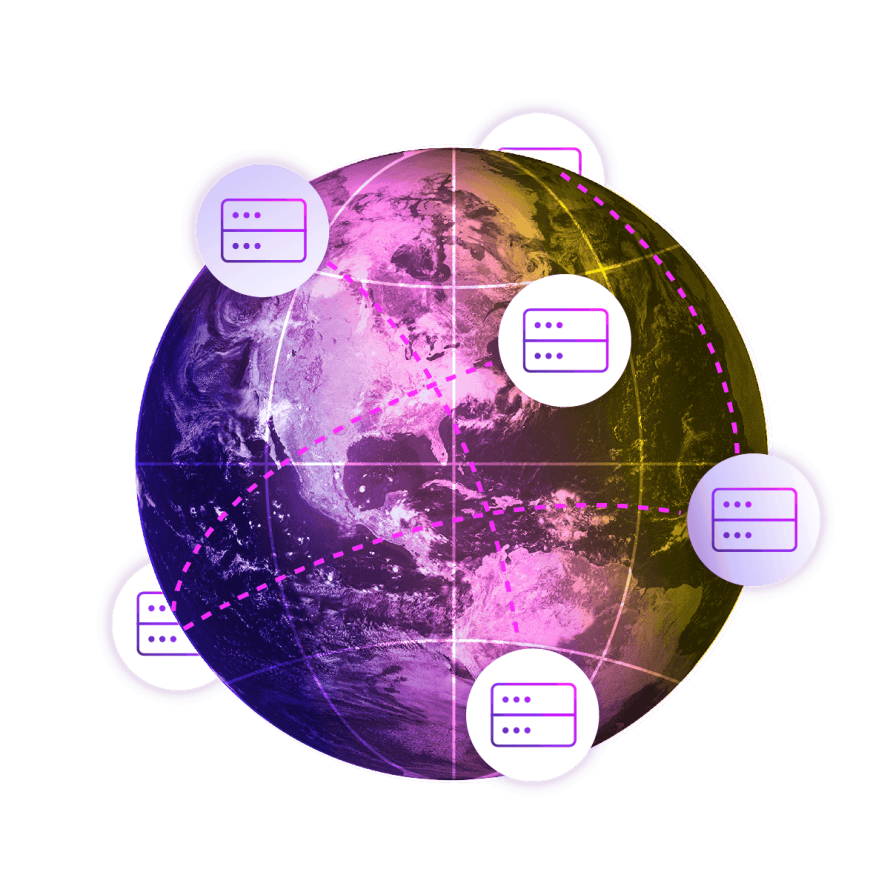
A multi-CDN strategy routes traffic across two or more CDN providers using intelligent steering to optimize for speed and availability. It solves real problems like regional performance gaps, provider outages and vendor lock-in.
But it introduces configuration drift, cache-hit dilution and monitoring complexity that can quietly erode the gains.
If your site runs behind one CDN while an asset manager like Cloudinary or a video platform serves assets through another, you're already running multi-CDN. That split creates inconsistent cache behavior, fragmented analytics and mismatched invalidation, which most teams never actively manage.
We’re going to break down how multi-CDN works, when the complexity pays off, and when a single integrated CDN delivers better results with less overhead.
What multi-CDN means: Key components and strategy
A multi-CDN strategy is a deliberate architecture decision that balances redundancy, performance and cost against real operational complexity. Don’t think of it as just adding another provider.
Each of its components serves a distinct function in that architecture:
- Redundancy and reliability mean automatic traffic rerouting when a provider fails or degrades. The Cloudflare outage in November 2025, for example, was triggered by a network configuration change. It cascaded across its edge infrastructure, disrupting access to numerous major services.
- Performance optimization routes users to the fastest available CDN based on real-time latency and geographic proximity. This is useful for teams with global audiences where no single provider has uniformly strong peering in every region.
- Cost management takes advantage of pricing differences across providers by blending traffic toward cheaper options where performance remains acceptable. It also gives you negotiating leverage since no single vendor holds all your traffic hostage.
- Dynamic traffic steering uses DNS-based or application-layer routing to direct requests based on latency data and geographic rules. DNS TTL of 30 seconds is a practical floor for steering precision, so real-time switching has hard limits.
- Intelligent load balancing distributes traffic across providers using weighted policies that factor in capacity, current load and provider health simultaneously. It differs from basic round-robin by reacting to live conditions rather than following a static split.
Common use cases
Multi-CDN is not a universal requirement. It pays off in specific scenarios where the cost of downtime, latency or regional gaps justifies the added operational burden:
- Streaming and media delivery demands uninterrupted playback across variable network conditions. Providers like Akamai and CloudFront have different strengths in video throughput, so splitting delivery across both reduces buffering in weak regions.
- Enterprise eCommerce ties CDN performance directly to revenue since every 100ms of added latency measurably impacts conversion rates. A failover path during peak traffic events like Cyber Monday prevents a single provider outage from becoming a financial incident.
- Software updates and downloads involve distributing large files to unpredictable geographic clusters of users. Routing these through multiple CDNs prevents bandwidth bottlenecks and keeps download speeds consistent even during major release windows.
- Global audience reach becomes a multi-CDN problem when your users are in regions where Western CDNs have poor or no peering, like mainland China. Pairing a global provider like Cloudflare with a regional one that has local infrastructure and ICP licensing solves gaps that no single vendor can cover alone.
How traffic routing works
Multi-CDN works by monitoring the performance of each provider in real time and routing traffic to the fastest healthy option. When one CDN experiences an outage or degradation, the system automatically switches traffic to an alternative provider without manual intervention. This sounds simple, but the mechanics have real constraints.
DNS-based steering is the most common approach. When a user's browser resolves your domain, the managed DNS provider evaluates health checks and latency data to return the IP of the best-performing CDN. The limitation is DNS caching. Resolvers and operating systems cache responses for the duration of the TTL so a failover triggered at the DNS level won't reach all users instantly. A 60-second TTL means some users continue hitting a degraded provider for up to a minute after the switch.
Geolocation routing assigns users to a CDN based on their IP address or resolver location. Most public DNS providers now use EDNS Client Subnet (ECS) to pass along the user's IP prefix for better accuracy. However, this method still has its oversights. Most notably, it often struggles with users on corporate VPNs or satellite links, which can mask a person's true physical location and lead to slower routing.
Performance-driven routing goes further by using real user measurement data to steer traffic toward the provider delivering the lowest latency at the moment. This requires synthetic monitoring or RUM beacons feeding back into the DNS layer, so decisions reflect actual network conditions rather than static assumptions.
Content partitioning takes a different approach entirely. Instead of routing all traffic through one provider at a time, it splits by asset type. Your HTML pages go through one CDN while images, scripts, or videos go through others. This avoids the cache-hit dilution problem, because each provider handles a consistent stream of the same content type.
CDN stacking places one CDN behind another to create tiered caching. The front CDN handles user requests while the back CDN shields the origin server. This reduces egress costs and consolidates cache-miss requests, but it is not active-active redundancy. If the front CDN goes down the back, CDN is not configured to serve users directly without reconfiguration.
Implementation best practices and common pitfalls
Getting multi-CDN running is straightforward. Keeping it running well is where most teams underestimate the effort. These practices separate a stable deployment from one that slowly degrades:
- Third-party monitoring is vital because vendor dashboards grade their own homework. Tools like Catchpoint or ThousandEyes give you vendor-neutral latency, availability and cache-hit data across all providers simultaneously.
- DNS-based routing is the most common entry point for traffic steering since managed DNS providers like NS1 or Route 53 can direct users based on geography or health checks. Keep TTLs at 30 seconds or lower to make failover responsive enough to matter.
- Content partitioning routes different asset types through specialized providers. Serve static assets through one CDN, API responses through another and video through a third if each provider has a genuine strength for that content type.
- Capacity planning ensures your secondary CDN can absorb a full traffic shift during failover. Send at least 15-20% of baseline traffic to backup providers so their caches stay warm and populated.
- Feature parity limits are a hidden cost in multi-CDN setups since your configuration defaults to the lowest common denominator across providers. If one CDN supports edge-side includes and another doesn't, you lose that capability everywhere.
- Cache consistency requires identical cache-control headers, TTLs and vary rules across all providers. Splitting traffic something like 70/30 means each CDN populates its cache independently, so your overall cache-hit ratio drops unless both see enough volume.
- Invalidation propagation must happen simultaneously across every provider when you purge content. A cache clear that hits one CDN but misses another serves stale content to a portion of your users with no visible error.
- Security alignment means WAF rules, TLS configurations, bot detection and DDoS policies must match across providers. A gap in one CDN's security posture becomes your weakest point, regardless of how well the others are configured.
How to monitor multi-CDN performance
Vendor dashboards tell you what each CDN sees from its own perspective. That’s not enough. You need a unified view that compares providers against each other using the same measurement methodology.
Synthetic monitoring runs scripted checks from distributed global locations at regular intervals. It catches outages and degradation before users report them. Tools like Catchpoint and ThousandEyes let you measure availability, response time and throughput per provider from the same vantage points on the same schedule.
Real user measurement captures what happens in the browser. RUM data reveals performance as your visitors experience it, including device type and geographic variation that synthetic tests might miss. This data should feed directly into your traffic steering logic so routing decisions reflect live conditions.
Define your KPIs before you cut over, not after. Baseline your current single-CDN metrics for cache-hit ratio, time to first byte, error rate and origin offload. Then measure the same KPIs after enabling multi-CDN. If your cache-hit ratio drops below 80% per provider, you likely need to rebalance traffic weights or rethink your partitioning strategy.
Micro-outages deserve special attention. A provider might maintain 99.9% aggregate availability while experiencing localized five-minute failures in specific POPs that hammer a subset of your users. Median latency stats likely won't surface these. You need percentile-level monitoring at p95 and p99 to catch degradation that averages hide.
When a single CDN makes more sense
Multi-CDN adds operational weight that not every team should carry. For many organizations, a tightly integrated single-CDN setup delivers better outcomes with significantly less overhead.
Agencies managing dozens of client sites benefit most from consistency. It’s easier to stay on top of one platform, one caching layer, one set of invalidation rules across every property. Multi-CDN across a portfolio of client sites multiplies configuration surface area and support burden in ways that rarely justify the redundancy gains.
Teams without dedicated CDN expertise should be honest about their capacity. Multi-CDN demands ongoing tuning of routing policies and security rules across providers. Without someone who understands cache-control headers at a granular level, the setup drifts silently toward misconfiguration.
Regulated industries often need a unified security posture with consistent compliance certifications across the delivery path. Splitting traffic across providers means maintaining SOC 2 or HIPAA compliance at every layer independently, which doubles the audit surface.
Integrated platforms like Pantheon's Global CDN handle whole-page caching, automatic purges and edge configuration without manual CDN management. You trade flexibility for operational simplicity.
For teams running WordPress or Drupal sites that need fast, reliable delivery without babysitting their infrastructure, that trade-off often makes more sense than bolting on a second provider.
How Pantheon fits the multi-CDN picture
Pantheon's Global CDN is built on Fastly and integrated directly into the platform. Cache purges happen automatically when content updates. Edge caching covers full HTML pages, not just static assets. There is no CDN configuration to manage because the platform handles it as part of the deployment pipeline.
The Advanced Global CDN adds a WAF with rulesets tuned specifically for WordPress and Drupal vulnerabilities, custom edge logic and image optimization. It’s a managed service offered via annual subscription for teams that need unique optimizations at scale.
Some teams place Cloudflare in front of Pantheon for additional DDoS protection or edge features like bot management. This creates a layered defense strategy rather than a multi-CDN architecture. Traffic still flows through a single path. Cloudflare handles the outer edge while Pantheon's CDN manages application-aware caching behind it. There’s no active-active routing or provider failover involved.
Layered stacking gives you defense in depth on a single traffic path. Multi-CDN gives you parallel paths with intelligent switching between them. Pantheon fits teams who want integrated performance without managing that parallel complexity themselves.
Take the next steps with Pantheon
If this guide clarified that multi-CDN adds complexity your team doesn't need, Pantheon removes that entire decision from your plate. The platform delivers enterprise-grade caching, automatic purges and edge security without requiring you to configure or monitor a CDN independently.
If you do need multi-CDN for global reach or strict uptime requirements, Pantheon's architecture still plays a role. Its integrated Fastly CDN can serve as your primary delivery layer while you add specialized providers for specific regions or content types.
The right move depends on your traffic patterns, team capacity and tolerance for operational overhead. Most teams running content-heavy WordPress or Drupal sites will find that Pantheon's integrated approach outperforms a multi-CDN setup. Start building on Pantheon and replace your CDN runbook with a platform that doesn't need one.