
Next.js On Pantheon Is Available For All Now
I’ve spent most of my career working on the web and have seen my fair share of trends come and go.
At Pantheon, we’ve watched WordPress and Drupal grow and become the platforms that power millions of the web’s most important sites. Both remain a fixture of professional web development, and we’re committed to supporting them. But the numbers tell a compelling story about what’s happening alongside.
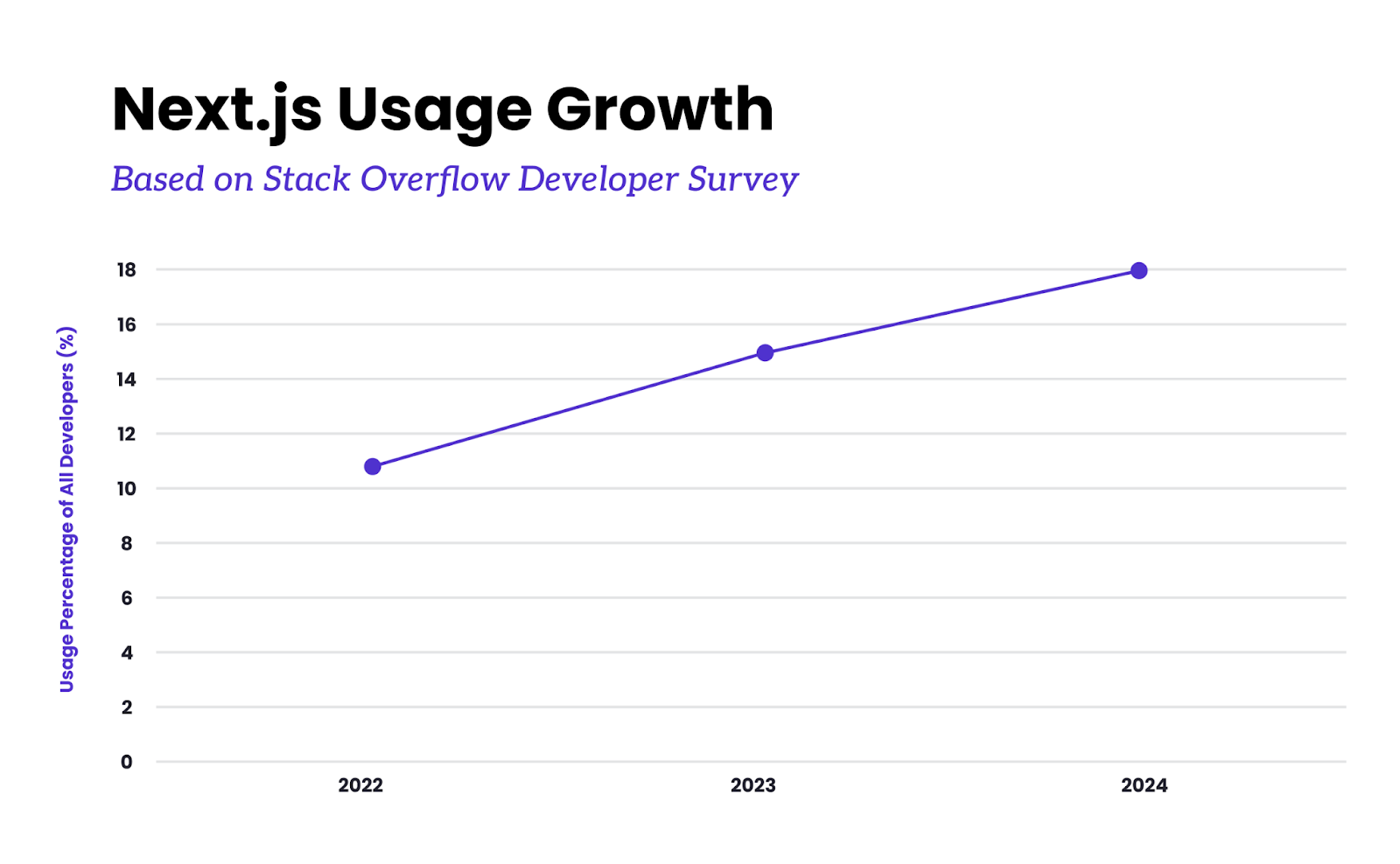
Next.js is the fastest-growing framework on the web. It ranked as the 4th-most popular web framework in the 2025 Stack Overflow Developer Survey, and the list of organizations running production sites on it speaks for itself: Nike, Netflix, Hulu, OpenAI, Ticketmaster, Perplexity, Marvel, and Claude.ai are all built on Next.js.
Whether you're already on Pantheon and your development team is pushing to add a Next.js frontend to your WordPress or Drupal site, or you're evaluating platforms for a net-new Next.js project, the message is the same: we want to meet developers where they are and support the tools they use today. Our goal remains to support all developers in building the best websites. And today, we're taking a major step toward that vision.
Next.js on Pantheon is now generally available.
What's Shipping

After months of private beta, feedback from dozens of customers, and some serious engineering work under the hood, Next.js on Pantheon is production-ready for teams at Gold tier and above.
Here's what GA includes:
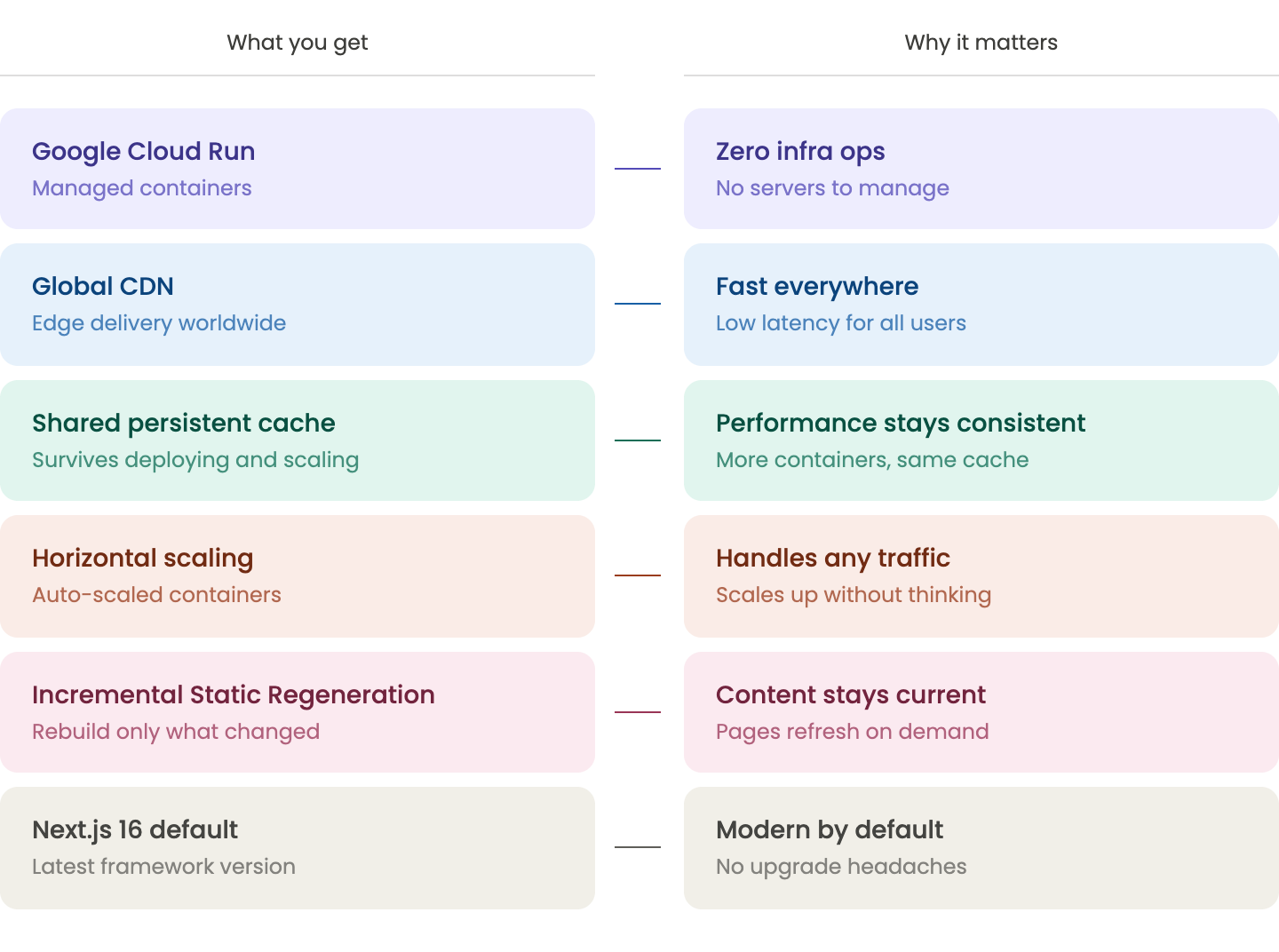
Performance built in. Every Next.js site on Pantheon runs on a managed container runtime backed by Google Cloud Run, with a global CDN, persistent caching shared across horizontally scaled containers, and support for Incremental Static Regeneration (ISR). Cache revalidation works by tag, time, and path, so your content stays fresh without sacrificing speed. HTTP Streaming and Suspense boundaries are fully supported, and we default to Next.js 16 for all new sites.
Enterprise-grade developer workflows. The same Git-based, Dev, Test, Live workflow you already know from WordPress and Drupal on Pantheon now applies to Next.js.
- Every pull request gets its own live Multidev environment with a shareable URL.
- Builds trigger automatically from GitHub commits.
- Secrets management lives in the Dashboard with per-environment overrides.
- Build and runtime logs are accessible via both the Dashboard and Terminus.
And if something goes wrong, you can instantly roll back to a previous version in Terminus and get back to a working state.
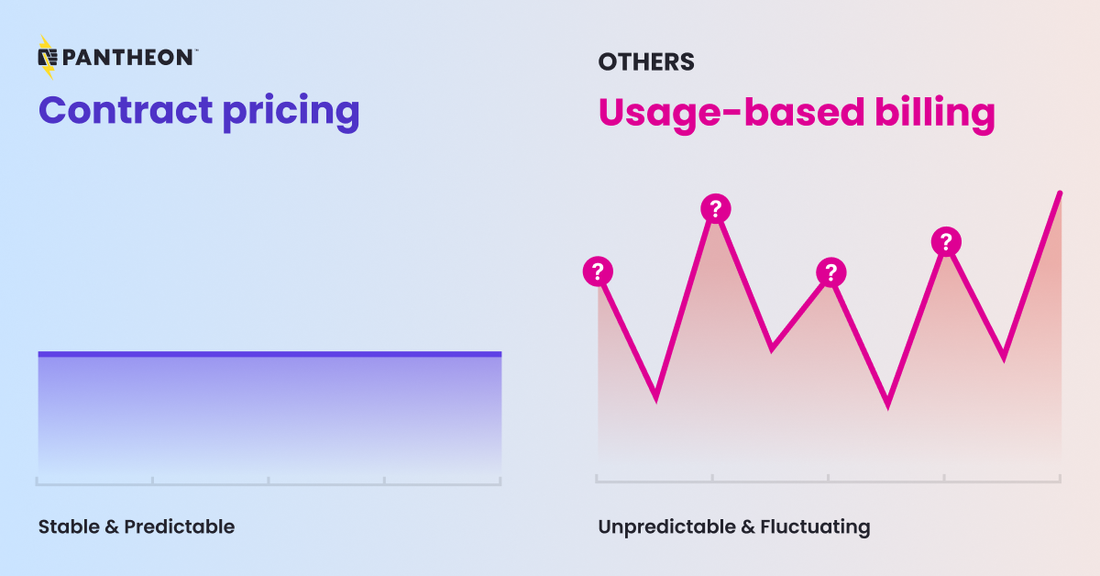
Predictable pricing. Next.js sites follow Pantheon's standard site plan pricing: contract-based, with no bandwidth overages, no per-invocation charges, and no surprise bills. For decoupled architectures, size the Next.js frontend plan for traffic and the CMS backend on a smaller plan. With appropriate configuration, Next.js can significantly limit the number of requests going to your backend.
Why Next.js on Pantheon?
There's no shortage of places to deploy a Next.js app. So why Pantheon?
The biggest reason is that, unlike most providers, you can easily run your Next.js frontend and CMS backend in the same place. Running these on separate platforms introduces friction that compounds over time. Keeping dev, staging, and production environments synchronized across two hosts requires constant coordination, and preview environments are only useful if they’re talking to the right backend data. Deployment dependencies make this worse: a content model change on the CMS side can silently break the frontend and, with no shared workflow, catching that before production requires manual discipline.
Plus, when something does go wrong, split hosting means two support queues, two sets of logs, and no clear owner of the problem. Headaches all around.
And if you're already running WordPress or Drupal on Pantheon, adding Next.js doesn't force you to start over. Your content team keeps the editorial tools they know. Your engineers get the modern frontend stack they want. You can modernize incrementally without committing to a full platform rewrite. The CMS stays in place and does what it's always done. Next.js just improves what visitors actually see.
Next.js in an AI-Ready World
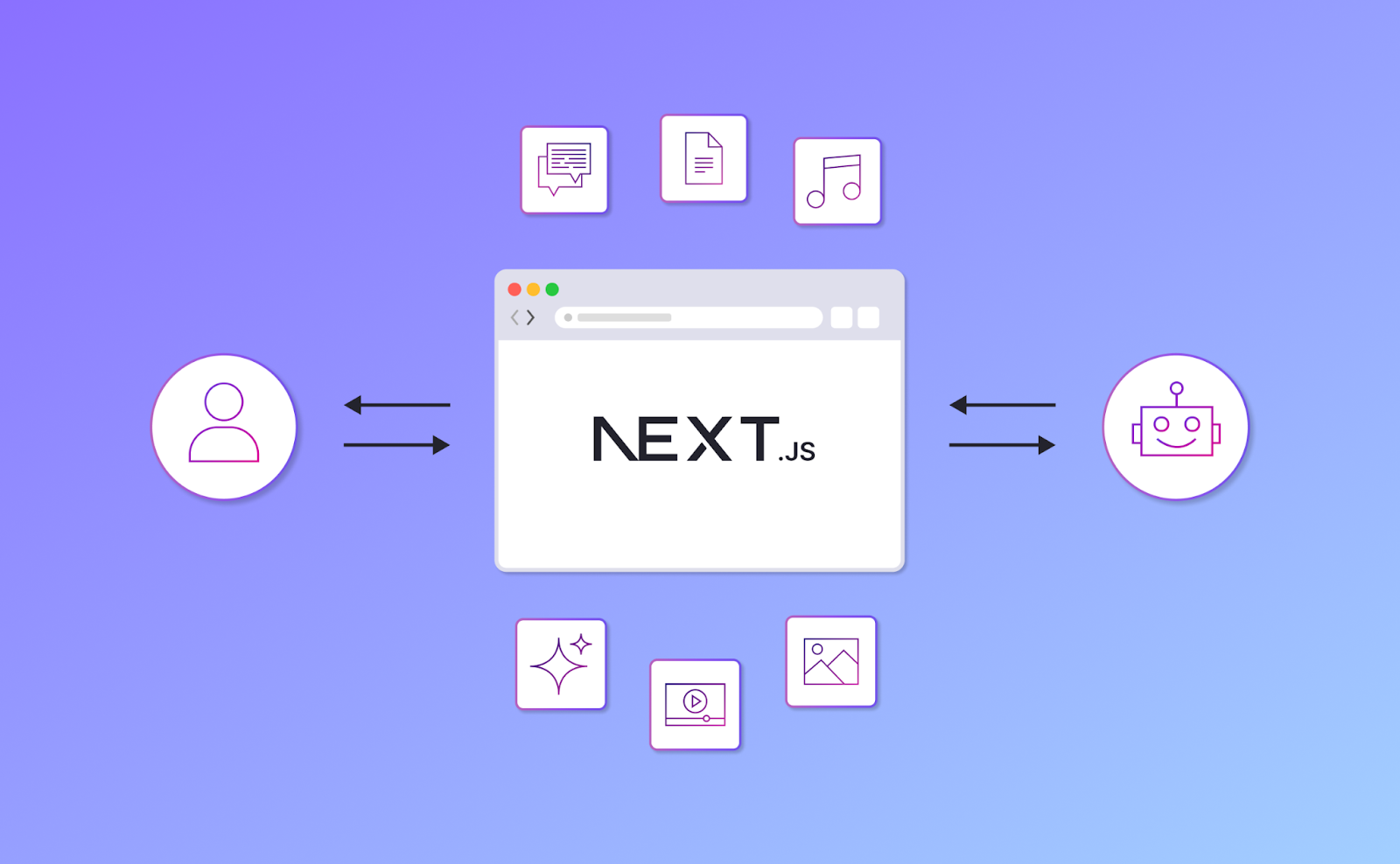
The web has a new audience: AI agents, LLM crawlers, and AI-powered search engines are now major consumers of your website’s content. Making your site readable and actionable by these systems is something that needs attention today if you want to stay relevant in this changing landscape.
Next.js positions you well for this shift. A headless, API-first architecture with structured content and clean, fast responses is exactly what AI systems prefer. When your content is decoupled from its presentation and served with proper caching and edge performance, you're building for both human visitors and the machine audience that increasingly shapes how people discover and interact with the web.
Pantheon's support for structured data and Anthropic's Model Context Protocol (MCP) means your foundation is ready for whatever comes next. AI-powered personalization, agentic commerce, or capabilities nobody has thought up yet–we're ready for all of it.
"Pantheon's Next.js solution is reliably assisting us scale with confidence. The support that they've proactively given us has been invaluable. It's a very solid partnership that we desire to keep strong going into the future!"
— Joe Cady, Strategic Website Operations, SPS Commerce
Next.js + Content Publisher: A Faster Path from Idea to Published Page
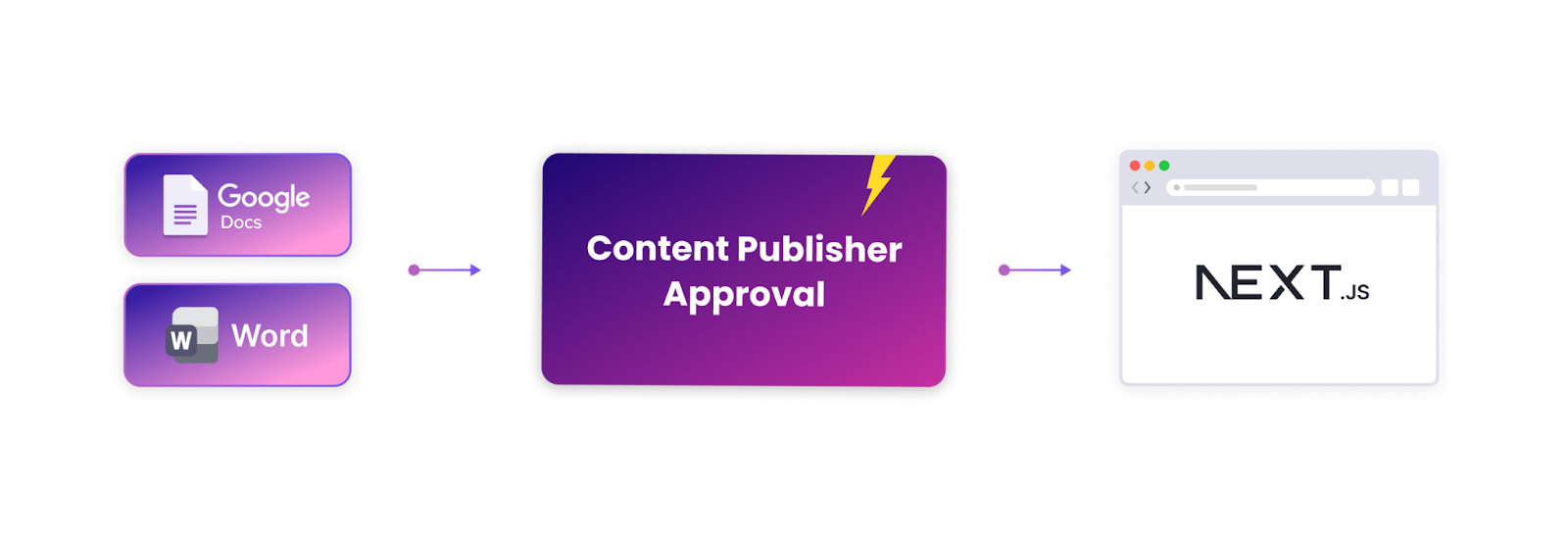
One of the most powerful combinations on Pantheon is Next.js paired with Content Publisher. Content Publisher connects Google Docs and Microsoft Word directly to your Next.js frontend, so your content team can draft, preview, and publish without leaving the tools they already use.
Here's what that means in practice: a writer updates a blog post in Google Docs or Word. Content Publisher pushes that change to your Next.js frontend with live preview and approval workflows. No developer ticket, CMS login, or copy-paste.
For organizations where content velocity matters, like media companies, universities, and marketing teams running multi-site portfolios, this is a meaningful reduction in friction between "done writing" and "live on the web."
Here are a few examples of what teams are building with this combination:
- Company blog or newsroom. Your communications team writes and edits posts in Google Docs or Microsoft Word. When a post is approved, it publishes directly to your Next.js-powered blog with AI-generated meta descriptions, SEO titles, and keywords already in place.
- Product documentation and help centers. Technical writers maintain docs in Google Docs or Word where stakeholders can comment, track changes, and collaborate in real time. Content Publisher pushes approved pages to a Next.js docs site with live preview, so writers can see exactly how their content will render before it goes public.
- Campaign and event landing pages. Marketing spins up a new landing page by creating a Google Doc or Word document, drops in copy and calls to action, and publishes it to a Next.js frontend without waiting on a developer to build a template or deploy a branch. When the campaign ends, they unpublish just as easily.
- Multi-site content distribution. A university or franchise with dozens of sites can author once in Docs or Word and publish to multiple Next.js frontends through separate Content Publisher collections. Same content, different destinations, each with its own approval workflow and branding. Teams across the Google and Microsoft ecosystems can contribute to the same collections.
See It in Action
Want to see how fast you can go from zero to a live Next.js site on Pantheon? Watch Miriam Goldman, Senior Solutions Architect at Pantheon, walk through the full setup process:
Watch the video: Setting up a Next.js site on Pantheon →
Get Started
Already a Pantheon customer? Head to your Pantheon Dashboard and create your first Next.js site today. Gold tier and above can get started immediately.
Not yet on Pantheon? Check out our pricing page to find the right plan for your team, or visit pantheon.io/platform/nextjs to learn more.
Want to hear from someone who has used Next.js on Pantheon? Attend the 4/22 April Platform Tour Webinar to hear from our customer SPS Commerce.
The web is dynamic by default. Your platform should be too.