How to Ship Websites Faster Without Chasing New Coding Models
In one week, the AI coding race reset twice.
On Nov. 9, Anthropic pulled ahead with Claude Fable 5.2 and Mythos 5.2, their best-ever coding models. Days later, OpenAI introduced GPT-6.2 Astra and Sol. However, the problem is not the latest model.
The web industry is now a few years into the AI model improvement cycle, and it's become clear to engineering teams that the worst bottlenecks cannot be solved by LLMs. These include messy human processes, such as establishing software standards or navigating stakeholder reviews. It also includes technical domains, like managing the infrastructure the code gets pushed into.
Even worse, sometimes adopting a more capable agent can increase this friction, because it hands large and complex units of work to a process that hasn't gotten any faster at absorbing it!
In this article, we'll hop off the AI model hype train and finally learn how to get your team's code to production faster and with higher quality.
Code is getting cheaper, but not the delivery
Team velocity is the elapsed time, effort and cost it takes to move a website feature from request to production.
Coding, the part that AI is now good at, is just one stage of the process. The full software development lifecycle also includes requirements, integration, testing, review, deployment, observation and maintenance.
There's a paradox at play. Total throughput is set by the slowest stage, not the fastest. So a gain in coding speed disappears when another stage remains slow.
You've likely experienced this yourself. You give an agent a goal, and it spends maybe an hour on a large website change that would have taken you a day to code by hand. But has your work gotten faster?
Pantheon’s State of the Web survey discovered that 78% of engineering leaders blame manual validation as an obstacle to scaling AI. For example, before the PR gets approved, the human must inspect and test the large diff and give feedback to the agent to try again. And sometimes that review includes your engineering coworkers or non-technical stakeholders, which can stretch out over days.
At the AI Engineer conference, Warp founder Zach Lloyd argued that teams should start treating the full website-building workflow as an engineered system, which starts by measuring cycle time, cost, and human intervention end-to-end.
So your concern should shift from model decision paralysis to finding a way to push code changes to production, with fewer delays and lower cost.
Three levers that let a capable agent move faster
Let's look at three places your team is experiencing a time sink, and explore ideas on how to patch it.
1. Codebase standards
A Claude or Codex agent has to make many autonomous decisions every coding session without pausing for questions. So any unwritten convention about your codebase and stack is an option the model can get wrong.
For example, on a Next.js project, you have many different routing patterns, rendering strategies, caching strategies, and component libraries to choose from. If you haven't firmed up those choices beforehand, the agent will hand you a gnarly PR that you'll have to slowly unwind.
At Pantheon, we provide you with opinionated Next.js kits that are starting points for your projects. You can fork them into version-controlled templates that remove guesswork from your team and their coding agents.
For the WordPress and Drupal backends that sit behind a Next.js frontend, Upstreams (acting as a scaffold for your sites) are self-serve and can enforce choices for settings, plugins, and modules that every new site adopts.
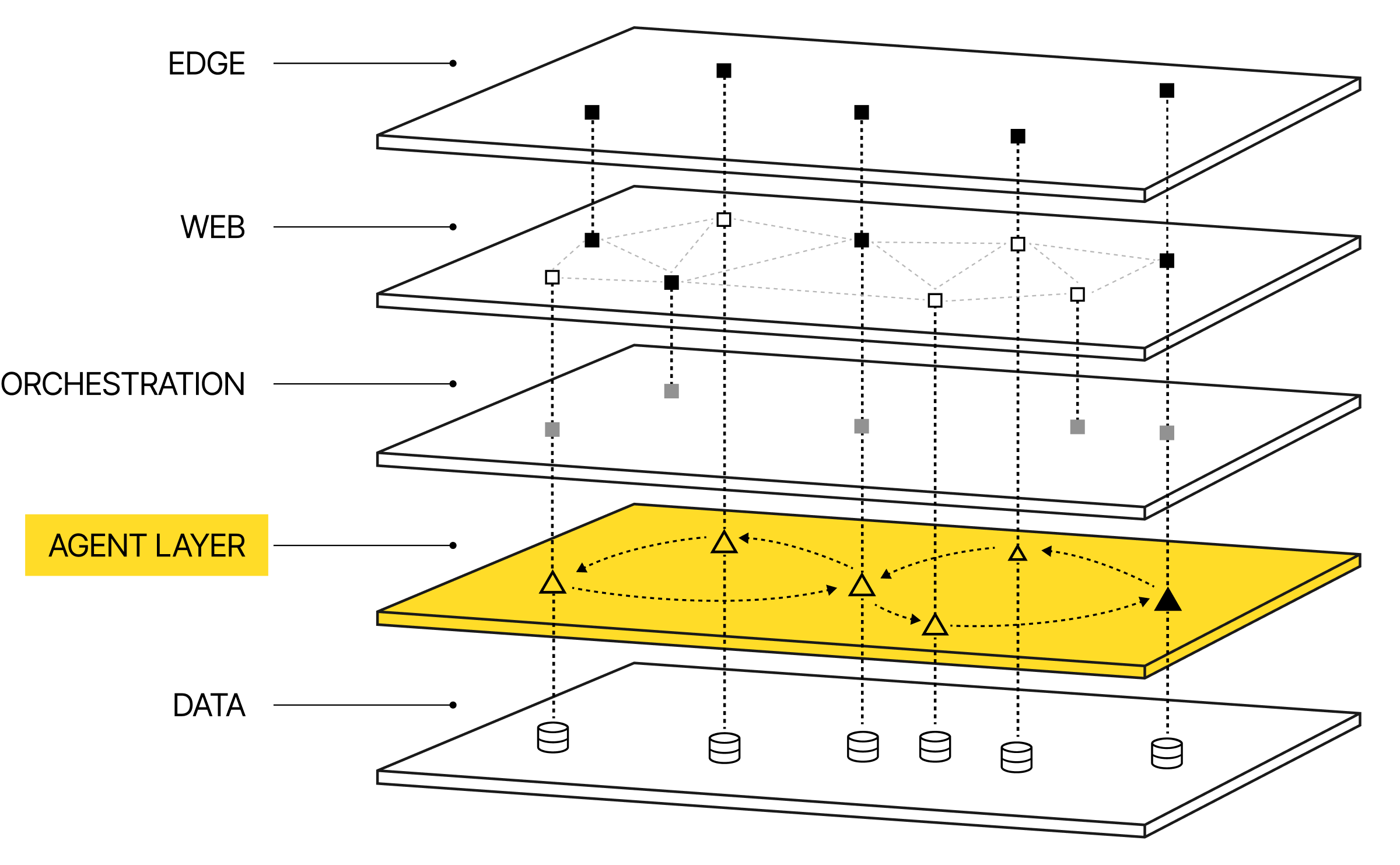
Next, you’ll want to view and manage all of your sites in one place, so you can hand more of the work to AI agents without losing control.
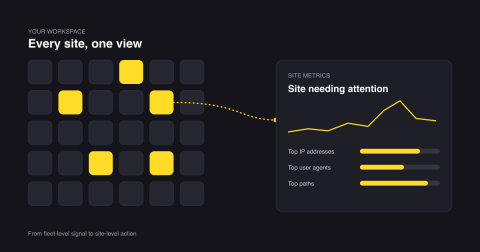
That's why we created Agentic Fleet Management. With AFM, you can apply updates to multiple sites in one action, which keeps your fleet secure and current without manual grunt work. And the new Site Administrator role lets you give site access to someone, like a third-party contractor, without exposing billing or your other projects.
2. Streamlined handoffs
A site update or new feature isn't delivered when an agent says "done." It's shipped only after people have inspected, tested and approved it.
Every one of those approvals is a handoff, and a handoff is where work waits. The agent hands a diff to you, and you pass it as a PR to a teammate for review. But you also need your designer or client to take a look at a running version of the site to give their feedback.
And not all feedback is from a person. There are also deterministic tests and linters, and non-deterministic feedback from review agents.
The productivity black hole expands when more than one person is shipping at once. Three developers, each running an agent, send three streams of changes toward the same reviewers and the same test environment.
Now branches drift apart while they wait, conflicts pile up, and a change that passed review on Monday needs re-testing on Friday because something else landed first.
Pantheon was built from the beginning to solve this exact problem. For example, if you use Next.js with Drupal, you can spin up isolated Multidev environments for both the front and backend. The environments come with a protected URL, so your designer or client can see the changes visually.
Because each pending project has its own environment, multiple developers and their agents no longer queue for one staging site, and your tests and review agents can run against a live copy of every change.
And when a security fix has to jump the line, it gets its own environment right away instead of waiting for a free slot. Once a change is approved, the Dev, Test, Live workflow gives it a safe path to release.
3. Unified platform
Now we've talked about broken standards and clumsy handoffs slowing down your team, but the biggest anchor is vendor sprawl. For example, a typical Next.js project needs three vendors: a frontend host, a backend host for the CMS, and a CDN.
This means separate accounts, credentials and dashboards to manage. And a code change has to travel through each of them before visitors see it.
Juggling multiple vendors slows you down in three ways.
- Onboarding. A teammate or a coding agent needs access to multiple systems.
- Debugging. Getting to the root cause of an issue starts with working out which vendor is at fault.
- Integration. Every connection between vendors is glue code that you have to keep current.
Pantheon eliminates vendor sprawl by putting every service a Next.js site needs on one platform. You build and deploy your front-end, CMS, and edge through one dashboard and API instead of several.
Pantheon also lets you change course mid-project without losing time to a new vendor. Say a client wants a site for a one-time event, so you build a statically rendered Next.js site. Partway through, they decide they want to update content on the fly, so you add WordPress on the same platform without hiring another vendor.
There's no new contract, login or integration to set up, so the team goes straight to building.
Spend the intelligence once, then reuse it
So far, we've found and fixed the weak spots in each stage of the Software Development Lifecycle (SDLC). The next step is to level up and improve the whole system, so that every fix makes the next one cheaper.
Take a Next.js site that has gotten slow. The cause could be the CDN, Next.js rendering, or the WordPress API. Pointing a frontier model at it is a good use of its intelligence. Doing that again on every site is not.
As Armin Ronacher from the Pi team argues, reusable code is easier to inspect and repeat than redoing the work through inference. Use AI to build the automation once, then keep the deterministic steps in code.
So spend that intelligence once. Have a capable model trace the request path through the CDN, Next.js, and WordPress using Pantheon's MCP server. Then turn what it finds into a script that uses Terminus, Pantheon's CLI, to manage your environments while it measures representative pages and records a baseline.
From there, make it a gate. On every proposed fix, CI runs the script against a preview environment and fails the build if performance regresses past your budget.
A cheaper agent can now run the script and read its output, which leaves the frontier model for work that needs it.
Building a system, not chasing a model
You standardized your codebases, which lets the script behave the same on every site. Preview environments give it a safe place to run. And using one platform means you can script a universal CLI with one set of credentials.
Congrats! You've now dramatically increased the productivity of your entire team, while reducing the reliance on frontier coding models.
Ready to stop chasing models and start shipping faster? Use Pantheon’s Agentic Fleet Management to accelerate your team's workflow and launch your next site with our Next.js Starter Kits.