
What Critical Vulnerability Responses Reveal About Your Web Platform

Someone shared a meme in the Pantheon community during this week’s php2shell vulnerability response: Homer Simpson sleeping peacefully under the caption, “Knowing my sites are on Pantheon.”
Image
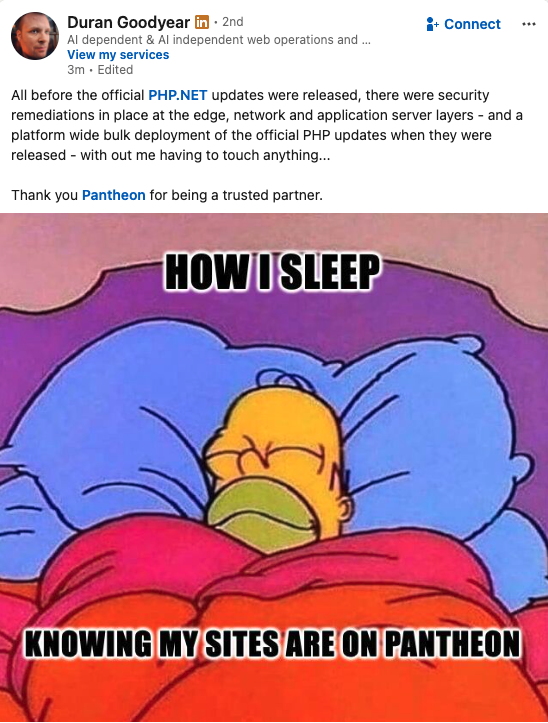
As the kids say, “you love to see it.” But the safe and snug image also begs a serious question: when a critical vulnerability lands, can your web team keep doing its job, or does the response become an all-hands interrupt fire drill?
Every Patch Starts a Clock
On October 21, two critical PHP vulnerabilities were disclosed. The immediate question for every web operations team was the same: how quickly can we reduce exposure, and how much of that work will ripple downstream onto our customers or stakeholders?
When a critical security patch is released, bad actors start reverse-engineering it to find a way to exploit whatever vulnerability was being closed. That’s the ticking clock. Historically, IT organizations had 7- or even 30-day SLAs for rolling out patches, because the work to weaponize them took time.
AI is making that clock run faster. The distance between disclosure, exploit development, and widespread weaponization is no longer measured in weeks or months. According to AWS Threat Intelligence and our own observations, it’s now hours. Single-digit hours in many cases. That’s more than an order of magnitude acceleration, and it significantly raises the stakes for operational agility.
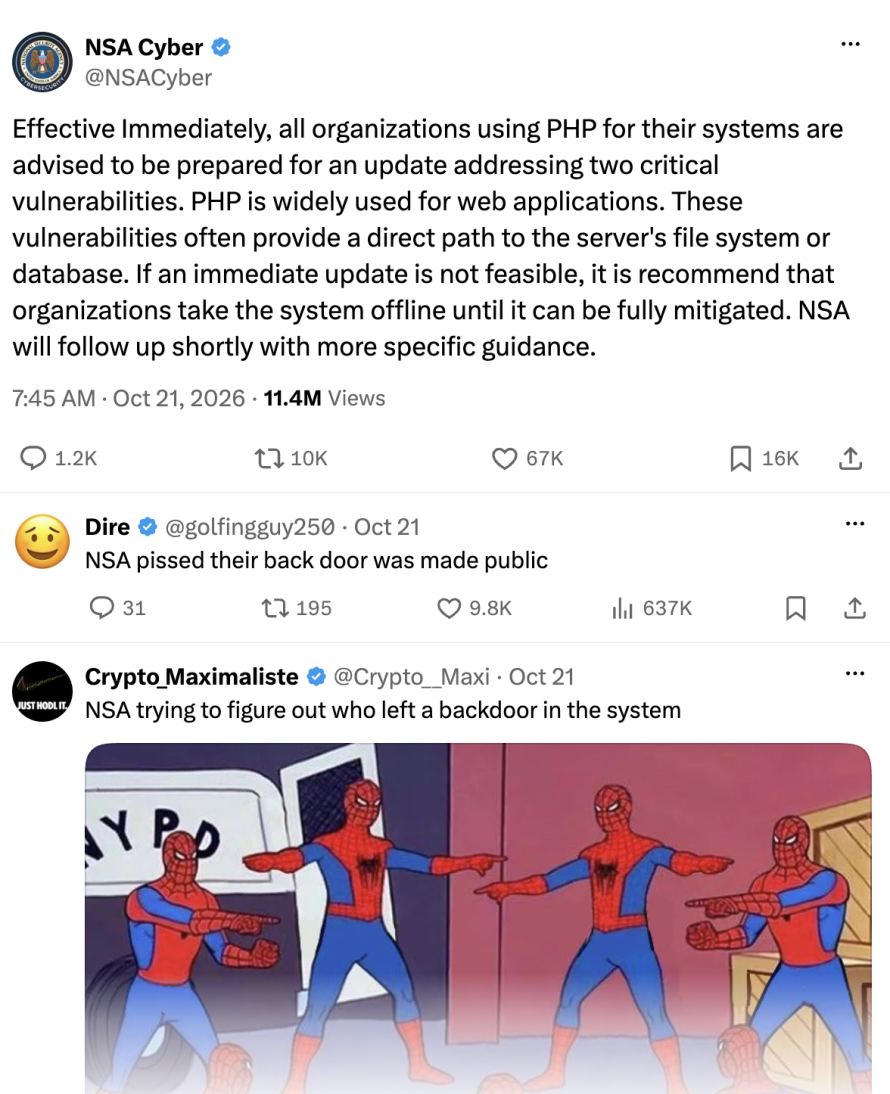
Those stakes were made clear in a public post from NSA Cyber on October 21. They advised organizations using PHP to prepare for an update, and if an immediate update was not feasible, to take systems offline until they could be fully mitigated.
That is an extreme defensive posture, but one that may be necessary in a self-managed “DIY” environment that’s just not geared up to respond to this kind of threat in real time. It also shows why managed response matters: customers should not have to choose between leaving a site exposed and taking their web presence offline while patching is coordinated by hand.
Image
The people closest to the web feel that pressure first. Web Systems Manager Paul Babin of UCLA Health described sitting in a “virtual war room” while his IT team chased applications across its landscape. He could point colleagues to the Pantheon status page for the sites he managed, and focus his attention where it was most needed.
How Pantheon Manages Response Internally
No platform can make vulnerabilities disappear, but it can make the response faster, more coordinated, and minimize downstream impacts on customers and stakeholders. That’s our job when events like this occur.
During this incident, Pantheon combined multiple layers of mitigation, including runtime configuration changes and network-level mitigations while patching progressed. This is what experts refer to as “defense in depth,” and it is key to a robust security posture, as my colleague (and Pantheon CISO) Dr. Joey Stanford explained in his post yesterday.
Internally, we operated an open call bridge (a Slack huddle, to be specific) with about six active engineers engaged in the response at any given time over about 10 hours total. This included our on-call rotation as well as other subject matter experts who put aside their planned work to join the response effort.
That team patched and deployed several hundred thousand PHP services across both supported and legacy LTS branches in just a few hours. At the same time, we maintained and monitored our network-level mitigation of activity probing the vulnerable surface. As we shared via the Pantheon status page, these mitigations blocked more than 60,000 suspicious requests over the course of the day.
We also used the same status page as the source of truth for progress as the mitigation progressed. We know that when customers depend on us, keeping them informed is key to keeping their teams focused and on task. There’s nothing worse than radio silence from a key vendor during an active security incident.
Incident Response: the Acid Test for Reliability
Critical incident response, by definition, calls for teams to do things that are not in their everyday runbooks. One risk the headlines often miss: real-time solutioning under tight time constraints has a way of triggering its own incidents.
Veteran operators know this from experience. Human error is inevitable, especially when moving fast and under pressure. It’s all too easy to take down your own control plane by feeding it an unplanned level of workload, or accidentally drop a database during a manual cleanup sweep.
These incidents put a platform and its organization in a crucible. We were able to roll all these application containers without dashboard degradation or creating a workflow bottleneck for users. That outcome is not an accident.
Pantheon is built different; our baseline is to be refreshing 10s of containers a second 24x7x365, so the system is already capable of handling the rapid release of new images. You can see from this chart of our container operations from Wednesday that we ramped up to just under 2x baseline during our response:
Image
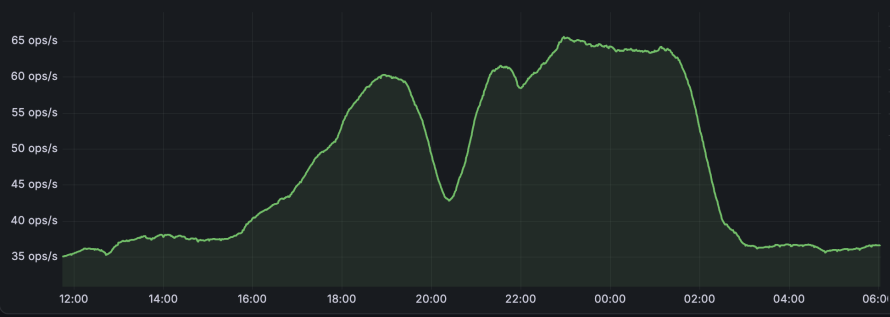
The platform gives us an edge, but people make this possible. We have a great team of elite YubiKey operators (and we’re hiring, BTW). The fact that we could do this so quickly and without creating any other bottlenecks reflects their hard work, some clutch payoff from our recent investments in AI tooling, and also years of modernization across the dashboard and the services beneath it, such as our core API, GraphQL, workflows, and the systems that connect them.
Events like php2shell are stress tests for platforms. It’s how you find out if you can patch at fleet scale, keep workflows available, communicate clearly, and give customers reliable information while the work is underway.
The New Baseline for WebOps
Mature software practices and DevOps are no longer optional improvements for web teams with extra time. They are not a “nice to have” or aspirational “best practices.” They are a must-have part of the security model.
Whether the web team’s platform is built internally or managed by a vendor, it needs to support a full Software Development Lifecycle (SDLC) for their work product. The team needs to know which PHP versions it runs and where; how changes move from development to production, and who deployed them; where logs and administrative activity are visible, and who owns the response when something goes wrong.
The goal is not a platform immune to vulnerabilities. That is not a credible security claim. The goal is to make the response less chaotic: reduce exposure quickly, preserve a known path for change, and keep humans in control of the decisions that matter.
Confidence Matters
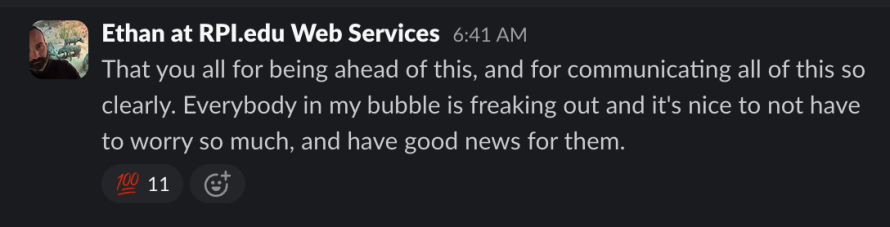
Ethan from RPI.edu Web Services summed up the customer experience we want to create: “Everybody in my bubble is freaking out, and it’s nice to not have to worry so much, and have good news for them.”
Image
While paranoia in the right proportion is a healthy thing for any security team, in the run-up to this incident and even during the response, there was an alarming amount of panic in the air. I think this is mostly attributable to the pre-release hype, but it’s worth reminding everyone that panic degrades your ability to think.
Fear literally is the mind killer. Something I learned early from more seasoned DevOperators is the value of maintaining a level head even when it feels like the world is burning. That’s a lot easier to do when you’re confident in your underlying foundations and architecture.
I want every professional in our industry to have that confidence. It’s the key to doing your best work, to resisting burnout, to keeping a level head in a field that sometimes seems to throw curveballs non-stop.
The work below the waterline matters. It matters most when customers need the platform to hold.